
Preserve your botanicals by drying them. Learning how to dry flowers is an easy way to preserve their fragrance, medicinal and cosmetic benefits, and beauty.
I love preserving flowers from my garden, and I know they are chemical-free. If you are gathering your flowers from other places, I recommend sticking to food-safe botanicals.
- Infuse your dried flowers in oils for making cosmetics, salves, and soaps.
- Infuse them in vinegars or rubbing alcohols, for cleaning products.
- Crush your dried flowers for soap decorations, or even edible sprinkles.
- Powder them for use in pretty milk tea layers, bath bomb, soap swirls.
- Blend them into your own herbal tea mixes.
- Crumble and rub dried flowers into sugar to make pretty, speckled sugar for baking and tea.
- Mix dried flower buds with rice for a therapeutic heating pillow, or with beans for a scented bean bag, or with cotton fluff for a scented stuffy.
There are so many beautiful and useful reasons to dry flowers. I would love to hear what you do with yours!

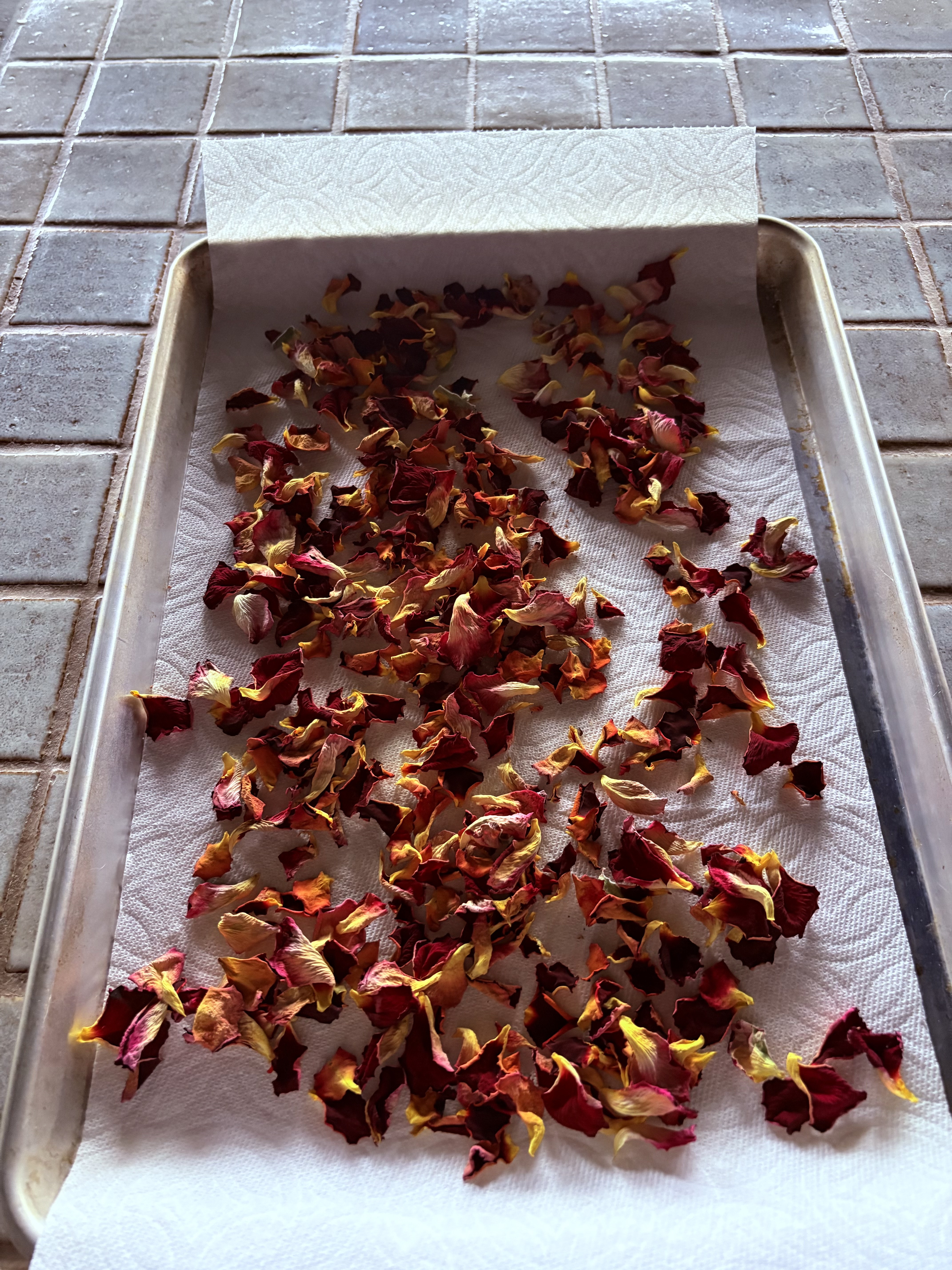


How to dry flowers
- Pick flowers in the morning during peak bloom.
- I like to leave flowers outside on my porch for a few hours to let beetles and other bugs escape.
- You can also shake them gently to help remove bugs.
- If they are dirty, lightly rinse and pat dry.
- Spread out your petals on a paper towel (or towel) lined baking sheet. Place somewhere dark and with good airflow (and out of reach of your cats or other little ones).
- Leave them on the sheet for 3-5 days, mixing them up with your hands each day. You can assess their dryness each day when stirring them up.
- They will be ready when they easily crumble and snap. If they are at all flexible, let them continue to dry!
- Once dry, store in an airtight, dark place. Opaque containers are ideal, but stashed away in a dark cabinet also works. Be sure to label with the flower and date.
Correctly dried, these will stay good for a year.
Drying tips
- Generally, I avoid drying whole heads of larger flowers (roses, peonies). I pick off their petals and dry those, they are much less likely to have trapped moisture that will pose a mold risk and hasten deterioration later.


Leave a Reply